


Hiking with your dog can add a wonderful dimension to your time on the trail, but you need to plan before you go. In most states, if your dog is injured, search and rescue will not assist you. Be prepared to rescue your pet or find assistance on your own.
To hike with you, your dog should be healthy, fit, and obedient.
- Make sure your dog is fit enough. Just as a couch potato human shouldn't set out on a challenging hike without training for it, neither should a semi-active or overweight dog. Remember, hiking is much more strenuous than walking. Short training hikes can be fun, too.
- Make sure the terrain you plan to hike is suitable for your dog. Every dog isn't suitable for every trail.
- Your dog should reliably respond to voice commands.
- Your dog should have a collar with an ID tag containing your contact information. You will also need a leash, as some places require them. Many hikers use a waist belt system for day hikes or a leash that can clip to their pack. You may want to add a small bell to the collar. The sound can help you know where your dog is when off leash.
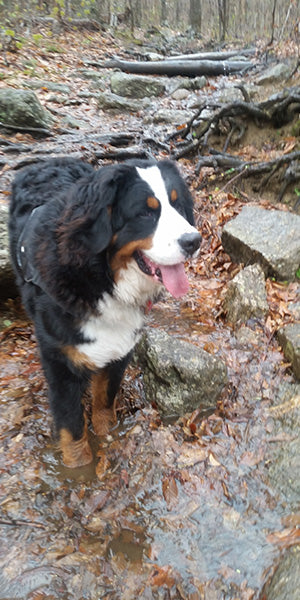
Discuss your hiking plans with your veterinarian.
If you plan to have your dog help carry the load, ask your veterinarian whether this is appropriate and how much your dog can safely carry. Typically, young and healthy dogs can carry up to 25% of their body weight, although some breeds or individual dogs can carry 10% to 15% more.
Check whether dogs are allowed on the trail.
Once you've picked a trail, check whether dogs are allowed, whether leashes are required, or whether dogs are only allowed in limited areas. It is generally best to keep your dog on a leash. Other people may be frightened of dogs or object to them being on the trail, and other dogs on the trail may be aggressive toward your dog.
Stop often to check your dog for cuts and ticks, and check again at the end of your hike.
Avoid hiking during the hottest part of the day.
Dogs cannot cool themselves as effectively as people, so plan your hike carefully and watch for signs of overheating.
Always carry a dog kit containing:
- Plastic bags if you plan to carry out your dog's waste, or a trowel or spade so you can bury feces well away from the trail.
- Basic first-aid supplies.
- Water and a collapsible bowl. Do not let your dog drink from streams or puddles.
- Snacks or food.
- An extra collar and leash.
- A current picture of your dog in case it becomes lost. This can be stored on your phone.
- A fluorescent orange reflective vest if you are hiking during hunting season or after dark.
- Dog booties, depending on the season and terrain.
- Your veterinarian's contact information.
Make sure your dog's pack fits properly.
If you tighten the straps too much, your dog may not be able to breathe properly. If the straps are too loose, the pack could slip off or cause chafing.

This article first appeared on the HikeSafe website.